
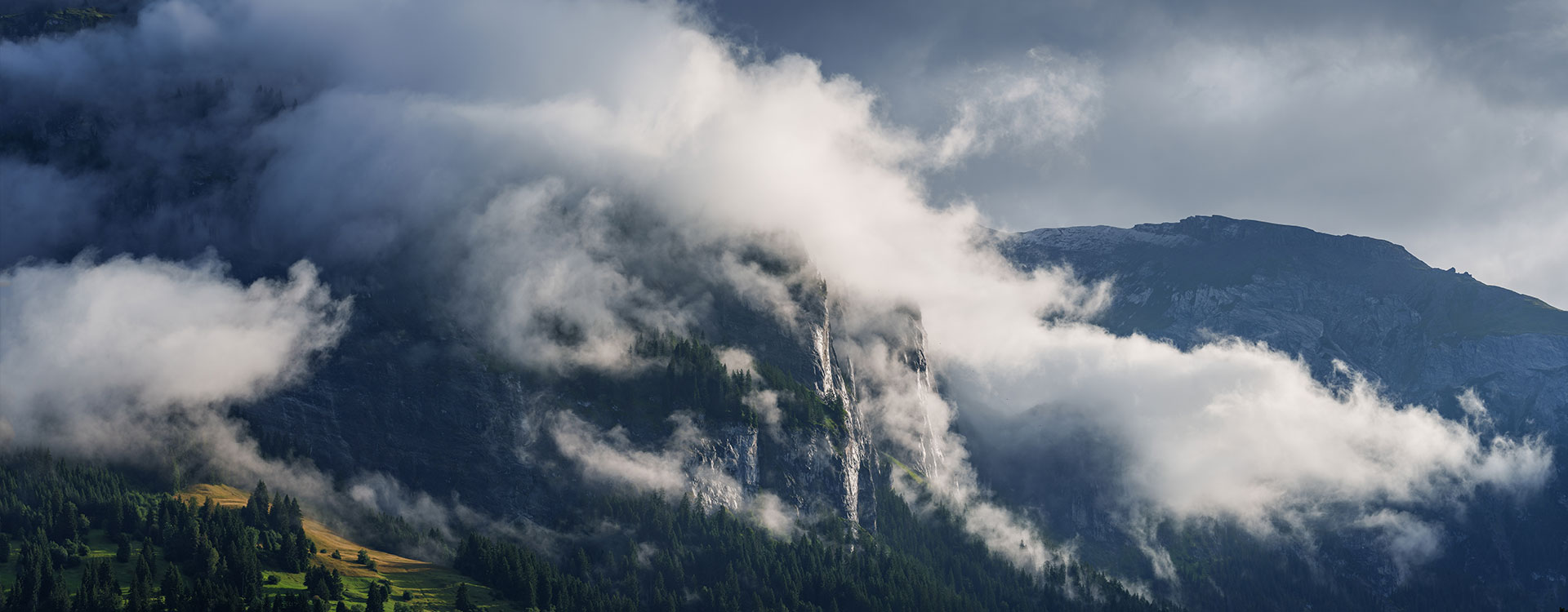
The alpine landscape around the Flimserstein and Cassons provides an important habitat for a wide range of wildlife. Steep cliffs, rocky ridges, alpine meadows and scree slopes offer shelter for specialised species such as Alpine ibex, chamois, golden eagle and bearded vulture.
With the FlemX, these areas have become more accessible to people than ever before. At the same time, wildlife depends on undisturbed habitats for feeding, raising their young and conserving energy during the long winter months. By exploring the area with care and respect, you can experience its remarkable wildlife while helping to protect it.
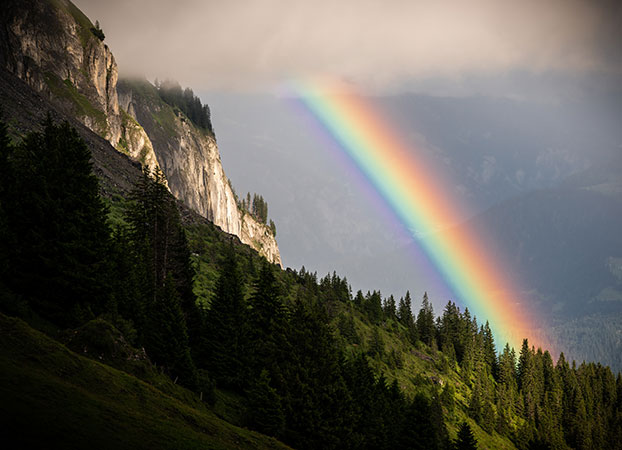
The area around Cassons and the Flimserstein is home to a diverse range of alpine habitats. Conditions are harsh, with short summers, long winters, strong winds and little shelter. Yet many species have adapted perfectly to life among rocks, snow and sparse alpine vegetation.
In a destination that welcomes visitors throughout the year, it is particularly important that wildlife has access to undisturbed refuge areas. The open slopes and rocky terrain are especially valuable, providing food, nesting sites and safe places where animals can retreat undisturbed.
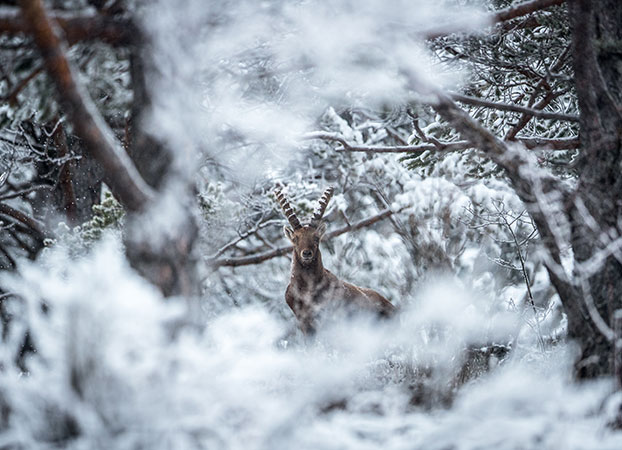
Habitat: High alpine rocky terrain above the tree line
Altitude: Up to around 3,500 m a.s.l.
Weight: Males can exceed 100 kg
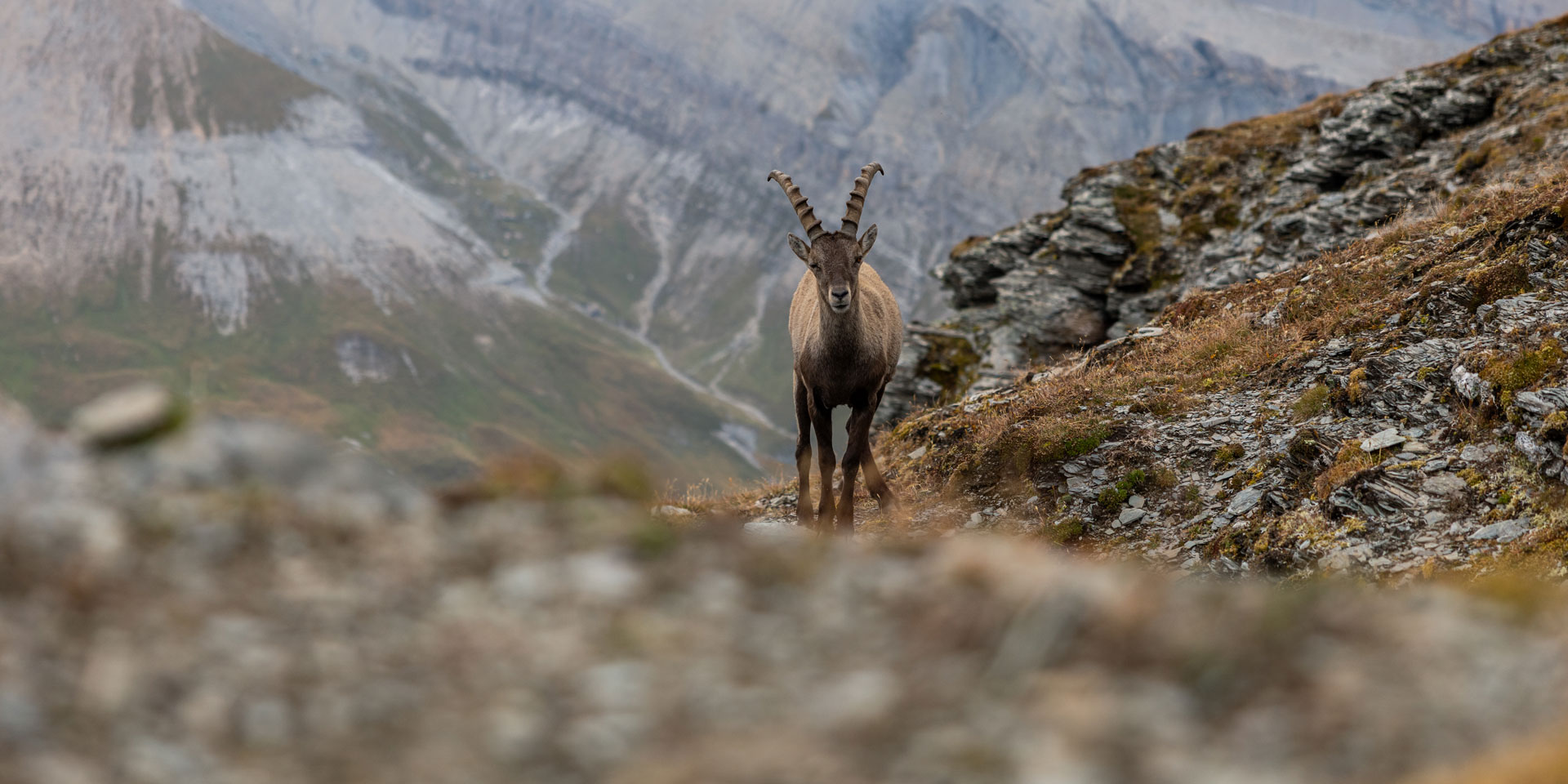
The steep cliffs around the Flimserstein provide an ideal habitat for Alpine ibex. Their flexible toes and specially adapted hooves allow them to move confidently across near-vertical rock faces, reaching places inaccessible to most other animals.
During summer, ibex usually stay at higher elevations. In winter, they seek sunny, sheltered rocky slopes where they can conserve energy while still finding food beneath the snow.
Did you know?
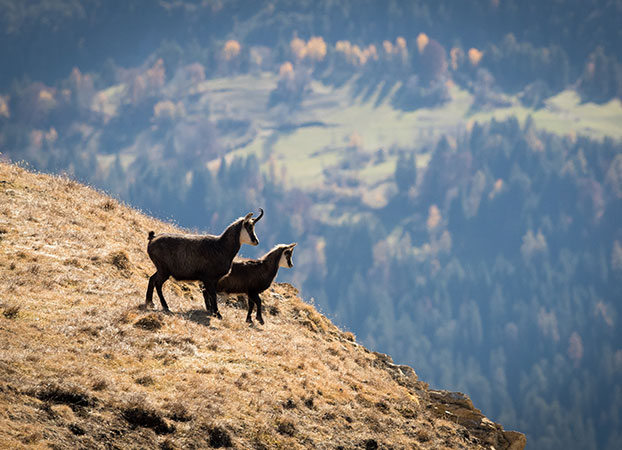
Habitat: Valley floors to high alpine terrain, cliffs, alpine meadows and steep slopes
Altitude: Well above the tree line
Identification: Slender black horns with hooked tips
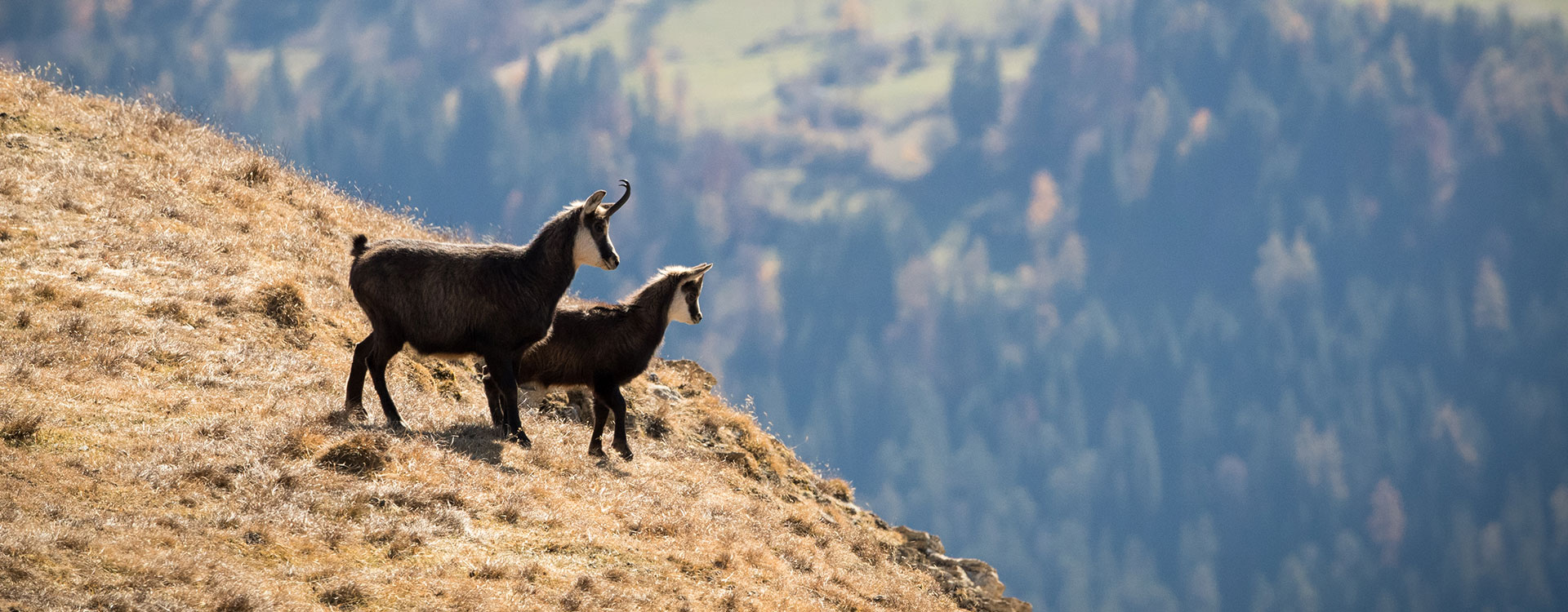
The rocky slopes around Cassons, Nagens and the Flimserstein are perfect habitat for chamois. Their elastic hooves provide exceptional grip, allowing them to move effortlessly across narrow ledges and steep mountainsides.
In summer they are often found at high elevations close to lingering snowfields. During winter they retreat to sheltered areas where food is easier to find and less energy is needed to survive.
Did you know?
Habitat: Cliffs and alpine mountain landscapes
Wingspan: More than 2 metres
Diet: Marmots, hares and young chamois
With a little luck, you may spot a golden eagle soaring high above the cliffs of the Flimserstein. Using rising air currents, it glides effortlessly across the mountains on its broad wings. The steep rock faces provide nesting sites, while its extraordinary eyesight allows it to detect prey from great distances.
Did you know?
Habitat: Alpine cliffs and mountain landscapes
Wingspan: Up to 2.8 metres
Diet: Mainly bones and carrion
The bearded vulture is one of Europe's largest flying birds. Using thermals and mountain updrafts, it can soar above the Alps for hours without flapping its wings.
The species became extinct in the Alps during the 19th century. Since the 1980s, successful reintroduction programmes have returned bearded vultures to the Alps, and they can once again be seen in Graubünden.
Did you know?
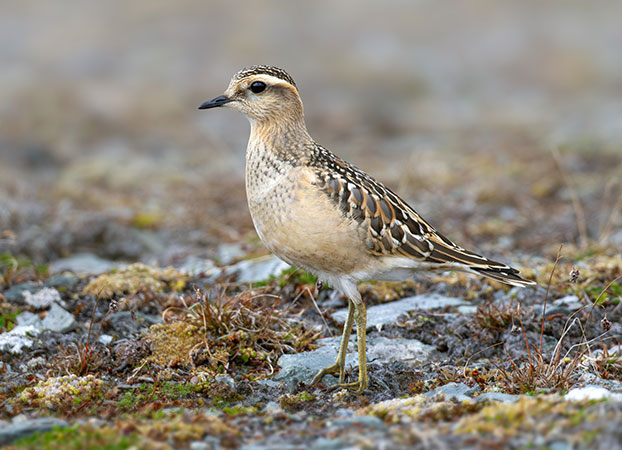
Habitat: Rocky ridges and alpine grasslands with sparse vegetation
Migration: Migrates between Scandinavia and North Africa
Status: Vulnerable (Red List)
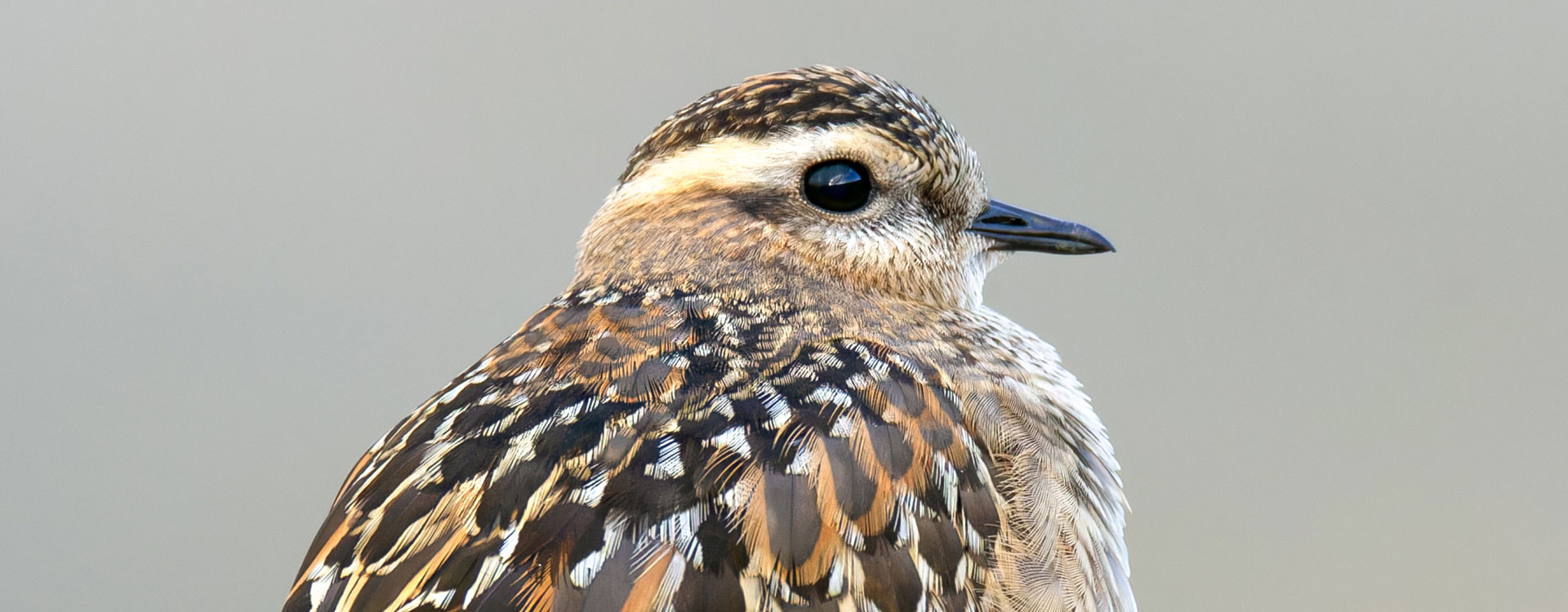
During spring and autumn migration, the rare Eurasian Dotterel regularly stops on the barren ridges around Cassons to rest after travelling thousands of kilometres. These quiet alpine resting sites are essential for replenishing its energy before continuing its journey.
Its excellent camouflage allows it to blend almost perfectly into the rocky landscape. Because Dotterels rely on camouflage rather than flight, they often allow people to approach surprisingly closely without being noticed.
Did you know?
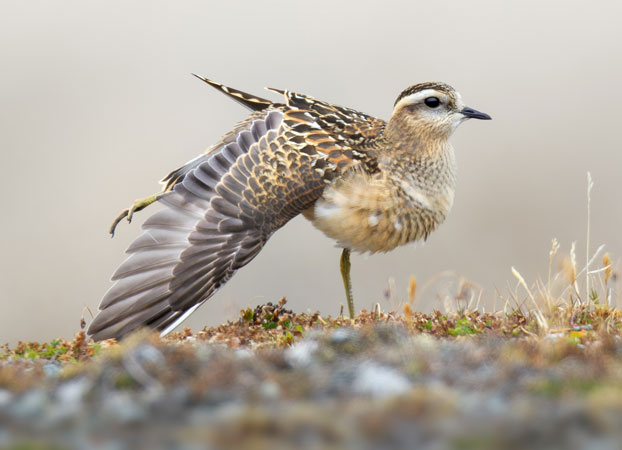
Flimserstein is a sensitive habitat for many wildlife species. During the breeding and rearing season, animals are particularly vulnerable to disturbance. You can help protect them by keeping a respectful distance from wildlife.
The rare Eurasian Dotterel stops on the barren Cassons Ridge during its migration in August and September. After travelling several thousand kilometres, it needs undisturbed rest to replenish its energy reserves before continuing its journey. Please keep your dog on a leash during the Dotterel protection period from 18 August to 10 September.
Please also refrain from flying drones, camping or bivouacking. In addition, the take-off and landing of hang gliders is prohibited on Flimserstein. Thank you for your consideration.
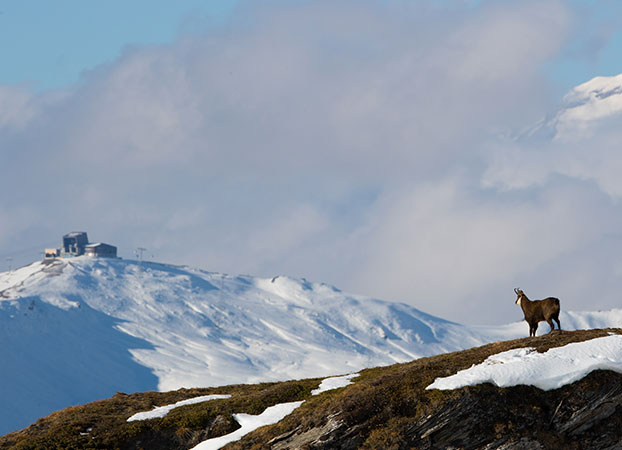
In winter, many wild animals are highly sensitive to disturbance. Every escape through deep snow consumes valuable energy that is difficult to replace.
To protect wildlife, a legally designated Wildlife Protection Area covers large parts of the Flimserstein. From 20 December to 30 April, access on foot and all winter sports activities are prohibited within the protected area. Please respect the Wildlife Protection Area.
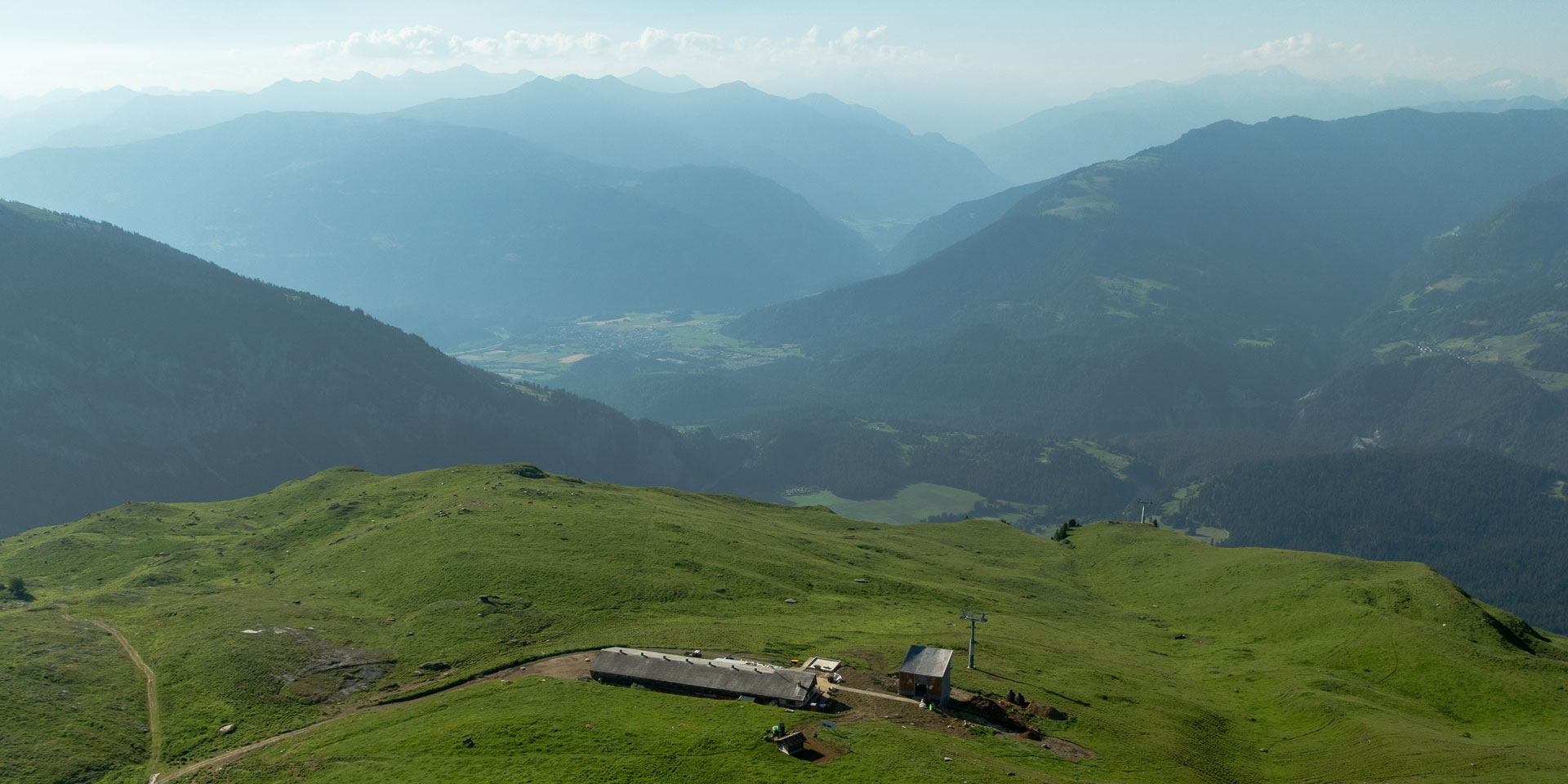
From June to September, around 170 mother cows and 120 calves spend the summer on the 600-hectare Flimserstein Alp. The new cableway transports the milk down to the valley and is now also open to hikers. The alpine summer concludes with the traditional cattle descent, followed by a festive celebration in Bargis.
The new ropeway replaces the previous installation, which had been in service for almost 50 years. It transports milk, agricultural supplies and alpine staff, and is now also open to hikers. The new cableway helps ensure the long-term management of the alpine pasture.


